tea
Japanese Tea Types Explained: Sencha, Gyokuro, Hojicha & More
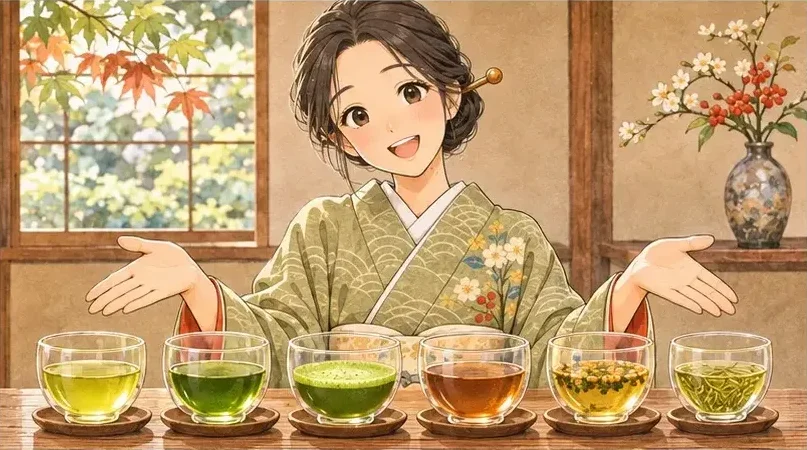
In short: Almost all Japanese tea is green tea, made from the same plant. The differences come from two things: how much sun the plants get before harvest, and how the leaves are processed (steamed, rolled, ground or roasted). Shading makes tea sweeter and richer; roasting makes it toasty and mellow.
Why Japanese green tea tastes different
Most Japanese green tea is steamed right after picking to stop the leaves from oxidizing. This keeps the bright green color and gives a fresh, grassy, sometimes ocean-like (umami) flavor. Many Chinese green teas are pan-fired instead, which gives a more nutty, toasty taste.
The main types
Sencha (煎茶) — the everyday tea
Grown in full sun, steamed and rolled into thin needles. It’s the most common tea in Japan: fresh, grassy, with a pleasant bitterness.
- Fukamushi sencha (deep-steamed) is steamed longer, giving a darker, cloudier cup that’s smoother and less bitter.
Gyokuro (玉露) — “jade dew”
Shaded for about three weeks (often 20 days or more) before harvest. With less sun, the leaves develop more of the amino acids that create sweetness and umami. Brewed with cool water in small amounts, it tastes rich, almost brothy. One of Japan’s most prized teas.
Kabusecha (かぶせ茶) — in between
Shaded for a shorter time (roughly one to two weeks). Its flavor sits between sencha and gyokuro — a little sweeter than sencha, easier to brew than gyokuro.
Matcha (抹茶) — the powder
Made from shaded leaves that are steamed, dried flat (as tencha) and stone-ground into fine powder. You whisk it and drink the whole leaf. See What Is Matcha?
Hojicha (ほうじ茶) — roasted tea
Green tea roasted over high heat until reddish brown. It tastes toasty, caramel-like and mellow, with little bitterness. It’s generally lower in caffeine than sencha and is a favorite after meals and in the evening.
Genmaicha (玄米茶) — tea with roasted rice
Green tea mixed with roasted brown rice, some grains popped like tiny popcorn. Nutty, comforting and easy to drink. Sometimes mixed with matcha for a brighter green cup.
Kukicha (茎茶) — stem tea
Made from the stems and stalks left after processing leaves. Light, sweet and refreshing, and usually affordable. A roasted version is called bō-hojicha.
Bancha (番茶) — later-harvest tea
Made from larger, later-harvest leaves. Simpler and lighter than sencha — an everyday, inexpensive tea in many homes.
Compare at a glance
| Tea | Growing | Processing | Taste | Color |
|---|---|---|---|---|
| Sencha | Full sun | Steamed, rolled | Fresh, grassy, a little bitter | Clear yellow-green |
| Gyokuro | Shaded ~3 weeks | Steamed, rolled | Sweet, rich umami | Pale jade |
| Kabusecha | Shaded ~1–2 weeks | Steamed, rolled | Between sencha and gyokuro | Green |
| Matcha | Shaded | Steamed, dried, stone-ground | Creamy, umami, gentle bitterness | Bright opaque green |
| Hojicha | Usually sun-grown | Roasted | Toasty, caramel, mellow | Reddish brown |
| Genmaicha | Sun-grown | Mixed with roasted rice | Nutty, comforting | Golden yellow |
| Kukicha | Sun-grown | Stems | Light, sweet | Pale green |
How to brew Japanese tea
The most important rule: the sweeter and more delicate the tea, the cooler the water.
| Tea | Water temperature | Steeping time (1st brew) |
|---|---|---|
| Gyokuro | 50–60 °C (120–140 °F) | About 2 minutes |
| Sencha | 70–80 °C (160–175 °F) | About 1 minute |
| Fukamushi sencha | 70–80 °C (160–175 °F) | 30–45 seconds |
| Kukicha | 70–80 °C (160–175 °F) | About 1 minute |
| Hojicha, genmaicha, bancha | 90–100 °C (195–212 °F) | About 30 seconds |
These are starting points — adjust to your taste. Use about 1 teaspoon of leaves per cup.
Koto’s tip: Japanese teas are made for several infusions. Pour out every last drop each time, so the leaves don’t keep steeping. The second brew is usually shorter, and many people think it tastes even better.
Where Japanese tea comes from
- Shizuoka — Japan’s best-known tea region, producing a huge share of the country’s sencha.
- Kagoshima — the other giant, in the warm south, with an early harvest.
- Uji (Kyoto) — historic home of high-grade matcha and gyokuro.
- Yame (Fukuoka) — famous for rich gyokuro.
Koto’s tip: The first harvest of spring, called shincha (“new tea”), is a seasonal treat in Japan. It’s sold for a short time in late spring and tastes especially fresh and sweet.
Which tea should you try first?
- New to Japanese tea? Start with genmaicha or hojicha — easy, forgiving and comforting.
- Like fresh, green flavors? Try a good sencha.
- Want something special? Try gyokuro — brew it carefully with cool water.
- Want the full experience? Matcha, whisked in a bowl.
FAQ
Which Japanese tea has the least caffeine? Roasted teas like hojicha, and stem tea, are generally lower in caffeine. Shaded teas like gyokuro and matcha are among the highest.
Do I need a special teapot? Not really — any teapot with a fine strainer works. But a Japanese kyusu makes pouring easier and is lovely to use.
How should I store loose tea? Airtight, away from light, heat and smells. Unopened packs can go in the fridge; let them come to room temperature before opening.
Related
Our picks
Japanese tea tasting set
Small packs of several teas from Japanese farms — the easiest way to find your favorite before buying a big bag.
Best for: Beginners and curious tea drinkers
View at Yunomi →Kyusu (Japanese side-handle teapot)
Its fine built-in strainer and side handle make it easy to pour every last drop, which matters for good second and third brews.
Best for: Anyone brewing loose-leaf Japanese tea
View at Amazon →Ceremonial-grade matcha
If the matcha section caught your interest, start with a smooth drinking grade.
Best for: Trying matcha straight
View at Jade Leaf Matcha →