seasonal
Hanami Guide: How Japanese People Celebrate Cherry Blossoms
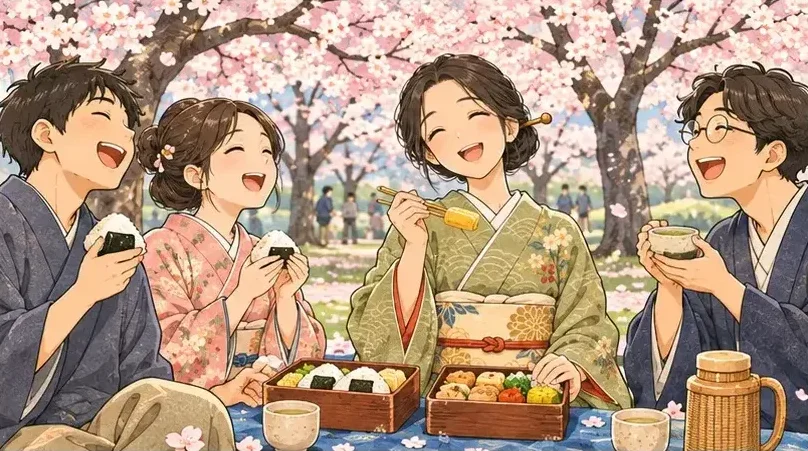
In short: Hanami (花見) means “flower viewing,” and in Japan it almost always means cherry blossoms. For one or two short weeks each spring, people gather under the trees with picnics, friends and coworkers. The blossoms open first in the south and move north, and the whole country follows the forecast.
Why cherry blossoms matter so much
Cherry blossoms (sakura) bloom all at once and fall within days. That short, beautiful life has long been linked to an idea in Japanese culture: enjoying something precisely because it doesn’t last.
Flower viewing goes back more than a thousand years. Early court poets mostly admired plum blossoms, but during the Heian period (794–1185) cherry blossoms became the favorite. Later, warlords held grand viewing parties, and in the Edo period (1603–1868) cherry trees were planted along rivers and hills where ordinary people could enjoy them too — the beginning of hanami as we know it.
When to go: the cherry blossom forecast
Every spring, Japan follows the sakura front (sakura zensen) — the line of blooming that moves from south to north.
| Area | Typical blooming time |
|---|---|
| Okinawa | Late January – February |
| Kyushu, Tokyo, Kyoto, Osaka | Late March – early April |
| Northern Honshu (Tohoku) | Mid to late April |
| Hokkaido | Late April – May |
Dates change every year with the weather. Weather services publish forecasts from early spring, and the news announces when official “sample trees” in each city start to bloom. Full bloom usually comes about a week after the first flowers open, and petals start falling about a week after that.
Koto’s tip: If you’re planning a trip, give yourself a few days of flexibility. A cold or rainy week can shift the bloom, and a windy day can bring the petals down fast.
What people actually do at hanami
- Picnic under the trees. Friends, families and office teams spread out picnic sheets and share homemade bento, convenience-store snacks and drinks.
- Save a spot early. At popular parks, one person may go in the morning to hold a place for the group — a job often given to the newest employee!
- Yozakura (夜桜), night viewing. Many parks and castles light up the trees after dark, sometimes with rows of paper lanterns.
- Walk and look. Plenty of people simply stroll along rivers, temples and castle moats lined with trees.
The most common tree is the Somei-yoshino, with pale pink, almost white flowers that bloom before the leaves appear.
Hanami food
- Bento boxes — rice balls, fried chicken, rolled omelet, seasonal vegetables
- Hanami dango (花見団子) — skewers of three rice dumplings in pink, white and green
- Sakura mochi — pink rice cakes wrapped in a salted cherry leaf
- Seasonal “sakura” versions of drinks, chocolates and snacks — see our guide to Sakura Season Treats
Hanami etiquette
- Don’t shake, pull or break branches. Cherry trees are delicate, and damaged branches can rot.
- Take all your trash home — or use the park’s sorting stations if provided.
- Check the park rules. Some parks ban alcohol, barbecues, music speakers or picnic sheets in certain areas.
- Don’t take more space than you need, and don’t leave a sheet unattended for hours where it’s not allowed.
- Keep the noise down at night, especially near homes.
Koto’s tip: Some of the most famous gardens in Tokyo don’t allow alcohol at all. Check before you go, so your picnic doesn’t end at the gate!
Well-known places for hanami
- Tokyo: Ueno Park, Shinjuku Gyoen, Chidorigafuchi moat, Meguro River
- Kyoto: the Philosopher’s Path, Maruyama Park, Arashiyama
- Nara: Mount Yoshino, covered in thousands of trees
- Hokkaido: Hakodate’s Goryokaku fort, in early May
These places get very crowded at peak bloom. Early mornings on weekdays are the calmest time.
How to enjoy hanami anywhere in the world
Many cities outside Japan have cherry trees — some planted as gifts from Japan. To make a Japanese-style hanami:
- Find blooming trees and check local park rules.
- Bring a picnic sheet and pack a bento: rice balls, an omelet roll, something pink.
- Add a sweet treat — dango or sakura mochi if you can find them.
- Stay until the evening if the trees are lit up.
FAQ
How long do cherry blossoms last? From first bloom to falling petals, usually about two weeks in one place — less if the weather is warm, rainy or windy.
Is hanami a holiday? No, but it overlaps with the start of Japan’s school and business year in April, so the season feels like a fresh start.
Do people drink at hanami? Many do, where it’s allowed. But hanami is just as much about families, children and quiet walks.
Related
Our picks
Waterproof picnic sheet (leisure sheet)
The blue picnic sheet is the symbol of hanami in Japan. A light, waterproof one keeps you dry on spring grass.
Best for: Any outdoor picnic, in Japan or at home
View at Amazon →Japanese bento box set
A tiered bento box makes even simple rice balls and side dishes look festive under the trees.
Best for: Packing a hanami picnic
View at Amazon →Cherry blossom tours and experiences
Guided walks and river cruises during sakura season — handy if you're visiting Japan for the first time and don't know where to go.
Best for: Travelers planning a spring trip to Japan
View at Klook →