seasonal
Setsubun: Why Japanese People Throw Beans at Demons Every February
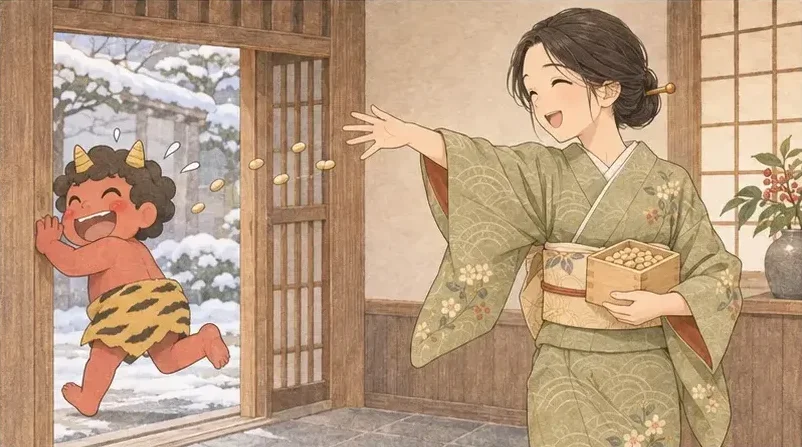
In short: Setsubun is a Japanese festival held around February 3, the day before the traditional start of spring. People throw roasted soybeans while shouting “Oni wa soto! Fuku wa uchi!” (“Demons out! Luck in!”), eat one bean for each year of their age, and in many homes eat a whole sushi roll in silence, facing that year’s lucky direction.
If you’re in Japan in early February, you might see supermarkets full of bean packs with paper demon masks, and people lining up for long sushi rolls. Let me explain why.
What does “Setsubun” mean?
Setsubun (節分) means “seasonal division.” In the old calendar, it was the day before the start of each season. Over time, the one before the start of spring — Risshun (立春) — became the most important, because spring once marked the beginning of a new year. So Setsubun is a kind of New Year’s Eve: a time to drive out bad luck before a fresh start.
The date moves slightly with the solar calendar. It is usually February 3, but sometimes February 2.
Why throw beans at demons?
The custom goes back to an old court ritual called tsuina, brought from China, in which evil spirits were chased away at the turn of the year. Over the centuries, it became mamemaki (豆まき, “bean scattering”) in ordinary homes.
Why beans? Several reasons are often given:
- Grains and beans were believed to hold life force and the power to drive away evil.
- Mame (bean) sounds like ma-metsu, “destroying evil” — a classic Japanese pun.
- The beans are roasted, because a raw bean that sprouts later was thought to bring bad luck.
The oni are demons or ogres from Japanese folklore — usually red or blue, with horns, wild hair and a tiger-skin loincloth. At Setsubun they stand for illness, disaster and misfortune.
How families celebrate
1. Mamemaki: throwing the beans
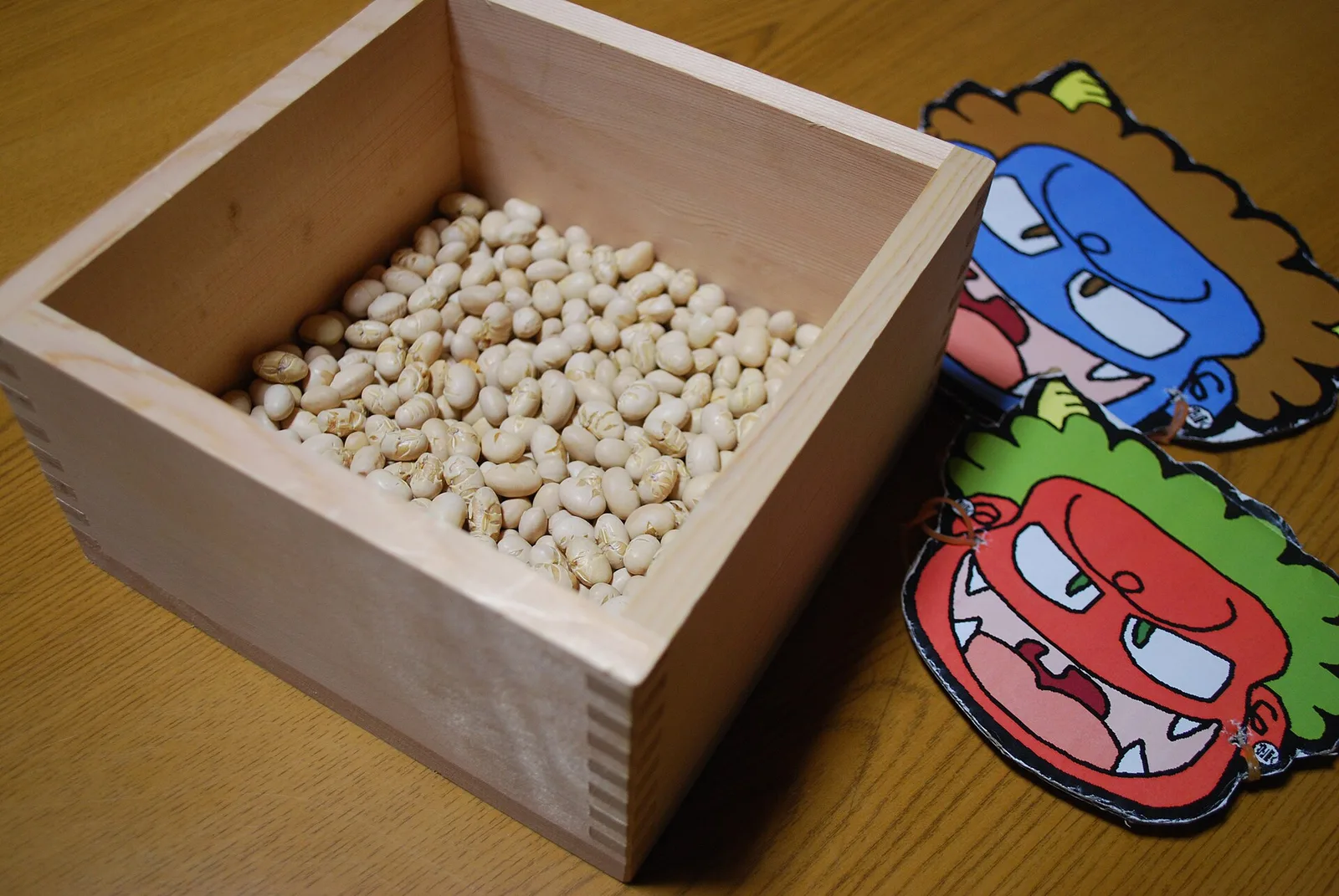
Someone — often the father — puts on an oni mask. Everyone else throws beans at the “demon,” out through the front door and windows, shouting:
Oni wa soto! Fuku wa uchi! “Demons out! Luck in!”
Then the doors are closed quickly so the luck stays inside.
2. Eating your age in beans
After throwing, everyone eats roasted beans — one for each year of their age (in some families, one extra for the year ahead) — to stay healthy through the year.
Koto’s tip: The roasted beans are called fuku-mame (“lucky beans”). They’re crunchy and mildly nutty — quite nice with a cup of green tea!
3. Ehomaki: the silent sushi roll
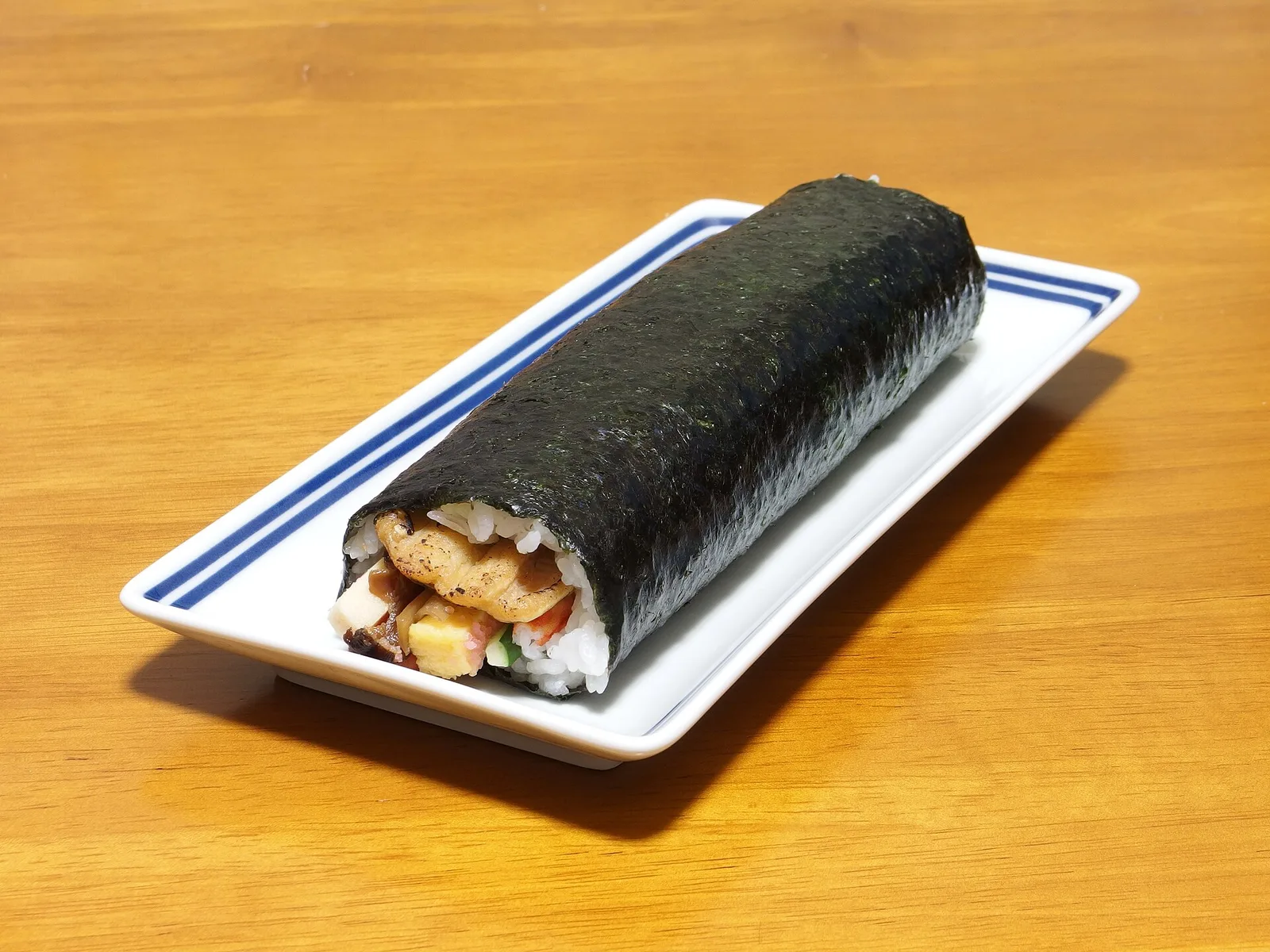
Ehomaki (恵方巻) is a thick sushi roll, eaten whole — not cut — while facing the year’s lucky direction (ehō), in silence, making a wish. Cutting the roll is said to “cut” your luck, and talking lets the luck escape.
The custom started in the Osaka area and spread across Japan from the late 1990s, when convenience stores began selling ehomaki nationwide. Today it’s one of the busiest days of the year for sushi shops.
For Setsubun 2027 (Wednesday, February 3), the lucky direction is north-northwest. The direction changes every year, following the old zodiac calendar.
4. Holly and sardines
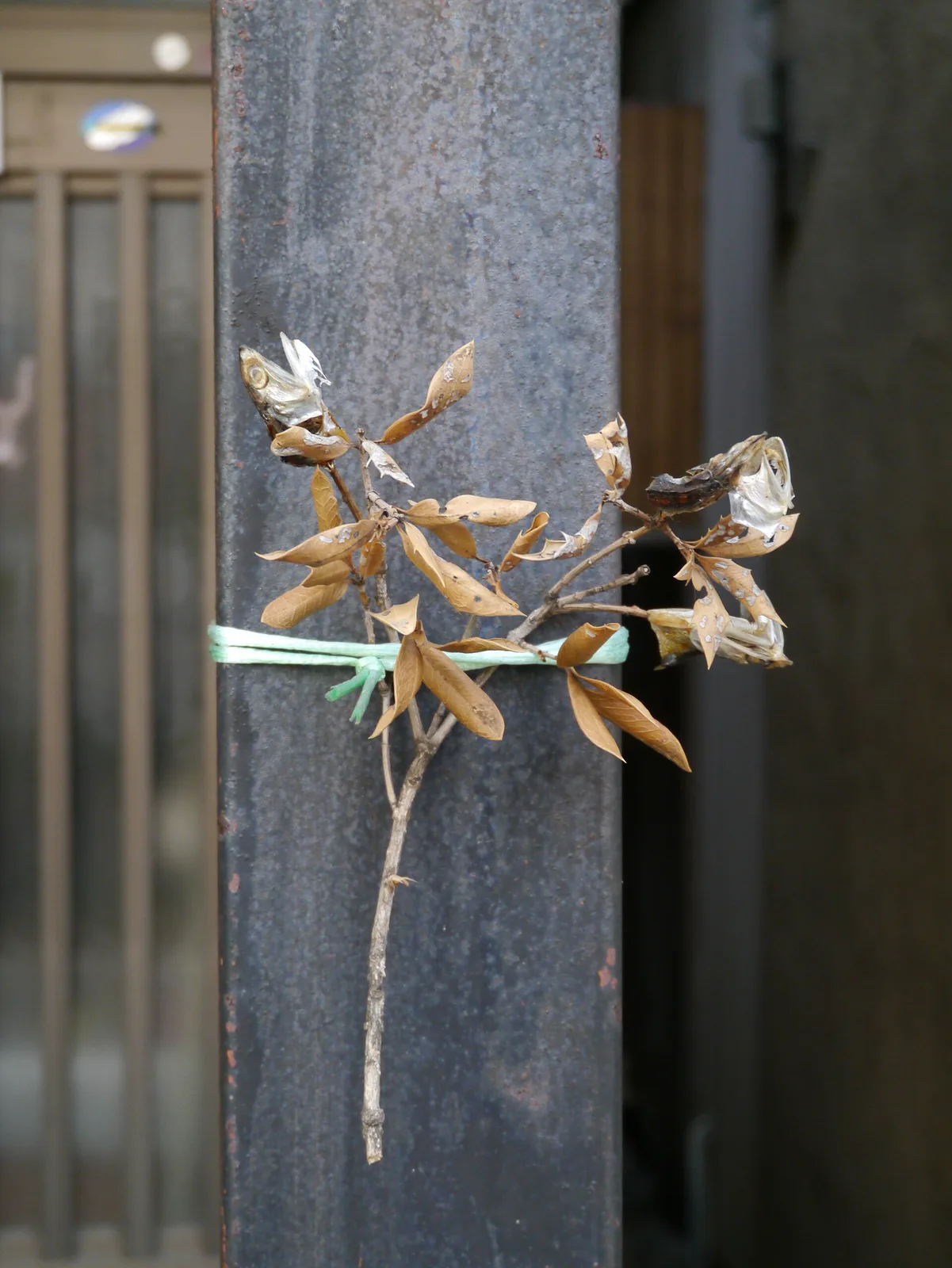
In some regions, people hang a holly branch with a grilled sardine head (hiiragi iwashi) at the entrance. The idea is that the holly’s sharp leaves poke the demon’s eyes, and the smell of sardine keeps it away.
Setsubun at temples and shrines
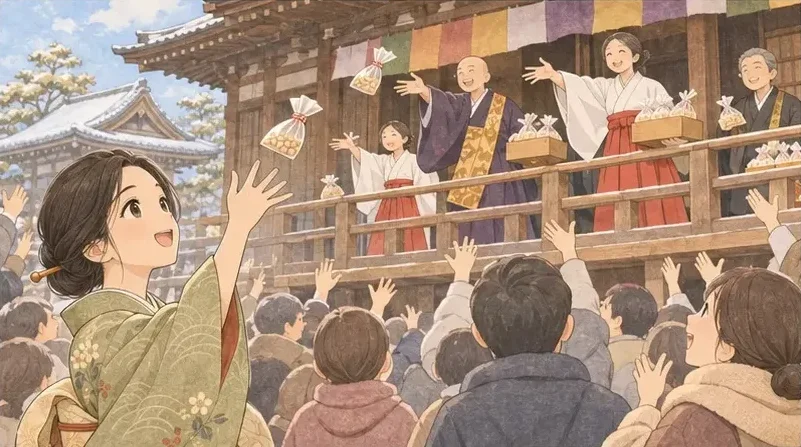
Many temples and shrines hold public bean-throwing events. Famous ones invite sumo wrestlers, actors or other celebrities to throw beans — and small gifts — into the crowd. Big events at well-known temples can draw huge crowds, so arrive early if you plan to go.
How to celebrate Setsubun at home (anywhere in the world)
- Get roasted soybeans. Look for fuku-mame in a Japanese grocery store, or lightly roast dried soybeans in a pan.
- Make a mask. Draw a red or blue oni on paper and cut out eye holes.
- Throw the beans out of the door and windows, shouting “Oni wa soto! Fuku wa uchi!”
- Eat your age in beans.
- Roll an ehomaki. Lay nori on a bamboo mat, spread sushi rice, add several fillings (often seven, said to stand for the Seven Lucky Gods), roll it up, and eat it whole facing the lucky direction.
Koto’s tip: Soybeans are a choking hazard for small children. Many Japanese families use individually wrapped packs or peanuts in the shell instead — easier to pick up afterwards, too.
FAQ
When is Setsubun? Usually February 3. It’s the day before Risshun, the start of spring in the traditional calendar, so in some years it falls on February 2.
Is Setsubun a public holiday in Japan? No. It’s a traditional festival, not a national holiday, so schools and offices are open.
Why do some people throw peanuts? In some areas, such as Hokkaido and parts of northern Japan, people throw peanuts in the shell. They’re easier to find in the snow and stay clean to eat.
Do people really eat a whole sushi roll in silence? Many do, and it’s become a fun annual tradition. Others simply enjoy ehomaki as a seasonal treat.
Related
- Seasonal Calendar — what Japan celebrates each month
- What Is Matcha? — the perfect drink with your lucky beans
Our picks
Roasted soybeans for Setsubun (fuku-mame)
The star of the day: lightly roasted soybeans for throwing — and eating one for each year of your age.
Best for: Trying mamemaki at home
View at Amazon →Oni (demon) paper masks
In Japan these often come free with bean packs. A mask turns bean-throwing into a game kids love.
Best for: Families with children
View at Amazon →Bamboo sushi rolling mat (makisu)
You'll need one to roll your own ehomaki — and it's useful for any sushi roll afterwards.
Best for: Making ehomaki at home
View at Amazon →Japanese snack subscription box
A fun way to taste seasonal Japanese snacks; winter boxes sometimes include Setsubun or Valentine's themes.
Best for: Gifts and trying something new each month
View at Bokksu →